
Precision Farming: How Guangzhou’s Agritech Innovation is Reshaping Agricultural Efficiency
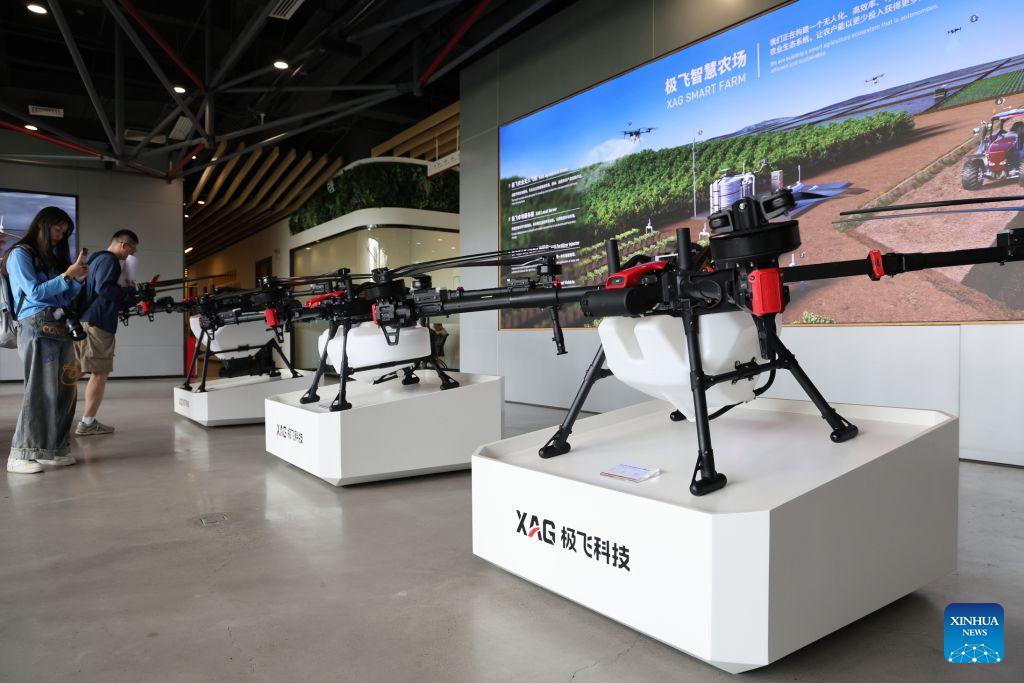
The evolution of agricultural technology is moving at a breakneck speed, and the recent developments at Guangzhou-based XAG provide a vivid illustration of this transition. Since its founding in 2007, the company has shifted the paradigm from traditional, labor-intensive farming to a model dominated by robotics, artificial intelligence, and new energy systems. The data behind this shift is compelling: by utilizing agricultural drones and unmanned ground vehicles (UGVs), farmers are seeing significant improvements in operational precision. These systems allow for highly targeted spraying and monitoring, which can reduce chemical usage by 30% to 50% compared to traditional manual methods, simultaneously lowering the cost per hectare and minimizing the environmental footprint.
From an industry perspective, the integration of these technologies is not just an incremental upgrade; it is a fundamental reconfiguration of the agricultural supply chain. XAG’s smart agriculture management systems serve as a centralized platform, allowing for real-time monitoring of crop health, soil humidity, and nutrient density. By analyzing this massive influx of data—sampled at high frequency—producers can optimize their resources, increase crop yields, and stabilize the quality of produce. As discussed in recent reports on People's Daily, the adoption of such automated solutions is crucial for addressing the aging agricultural workforce and the rising demand for food security in increasingly complex climate conditions.
The scalability of these robotics is perhaps their most impressive feature. Whether it is a drone hoisting freshly harvested tea leaves in a mountainous region like Fenghuang Town or an autonomous UGV navigating a flat-land orchard, the versatility of these platforms is driving down the total cost of ownership for farmers. We are seeing a shift where the "cost-per-task" cycle is significantly shorter, and the return on investment (ROI) is becoming more predictable due to the high reliability and long operational lifespan of these units. For global markets, this represents a new frontier in agritech innovation. As more countries seek to improve their agricultural productivity and manage resource scarcity, the technologies emerging from Guangdong’s industrial ecosystem—emphasizing AI, robotics, and connectivity—are setting a new standard for efficient, sustainable farming.
News source: https://peoplesdaily.pdnews.cn/china/er/30052523622
Hire your first freelancer through GigWam — in under 48 hours.
AI-matched talent, built-in contracts, and compliant payouts in 38 currencies. Free for 14 days.